


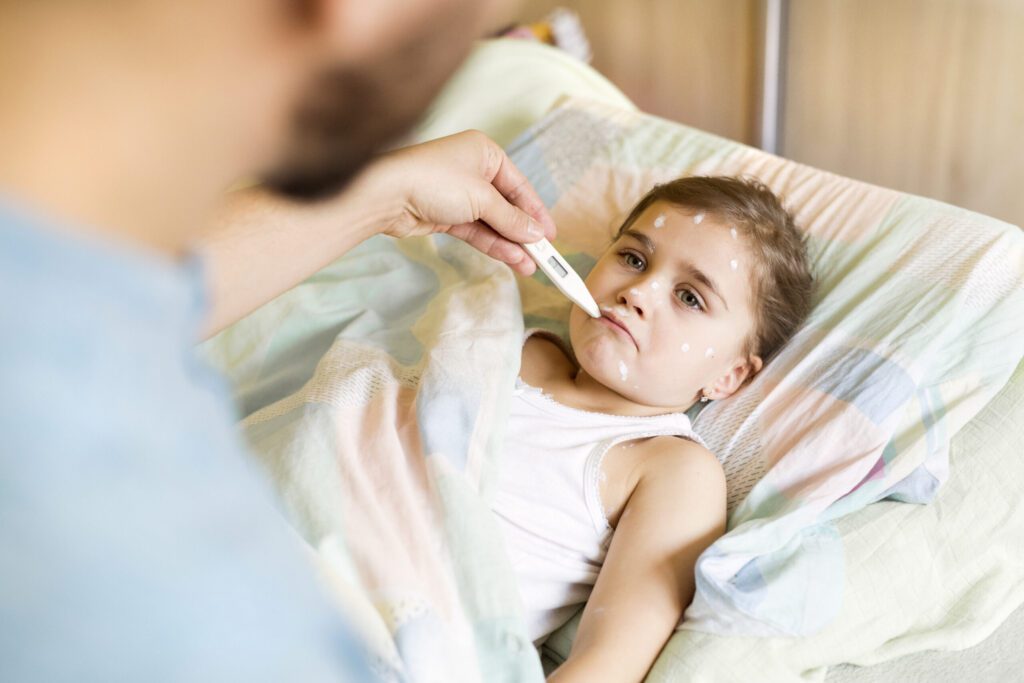
Chickenpox is a common childhood disease caused by the varicella-zoster virus (VZV). It occurs primarily in young children and is highly contagious. Although it is usually mild, it requires careful management to reduce bothersome symptoms and avoid potential complications.
SYMPTOMS OF WINDBREAKTHROAT
The first signs of chickenpox appear 10-21 days after exposure to the virus and include:
- Rash: Small red spots that develop into fluid-filled blisters and eventually crust over. They usually start on the face, chest, and back and spread throughout the body.
- Itch: Intense itching, which can become bothersome especially at night.
- Fever: Usually low, but can reach up to 38-39°C.
- Fatigue and Malaise: The child may be weak, tired and have a reduced appetite.
- Headache and Muscle Pain: They may appear before or during the rash.
HOME CARE
Chickenpox is mainly treated with home care to relieve symptoms.
1. Itching Relief
- Keep your child's nails short to prevent infections from scratching.
- Apply special soothing lotions, such as calamine, to reduce irritation.
2. Control of Fever and Discomfort
- Give plenty of fluids and light meals to keep the child hydrated.
- If the fever is high, use paracetamol according to the pediatrician's instructions. Avoid aspirin, as it can cause Reye's syndrome, a rare but serious complication.
3. Avoiding Transmission
- Chickenpox is easily spread through airborne droplets and direct contact with the rash. Keep the child isolated until all blisters have crusted over (about 7-10 days).
- If there are other children in the house who have not had chickenpox or have not been vaccinated, they are likely to get infected.
WHEN TO CONTACT YOUR PEDIATRICIAN
Although chickenpox usually passes without complications, contact your pediatrician if:
- The fever lasts more than 4 days or is very high (over 39°C).
- The blisters show intense inflammation, pus, or increased pain.
- The child is having difficulty breathing or showing signs of drowsiness and weakness.
- If the child has a weakened immune system.
CONCLUSION
Chickenpox is a common childhood illness that requires patience and careful care at home. Proper hygiene, symptom relief, and avoiding infections are key steps for a quick and safe recovery. For any concerns, don't hesitate to contact your pediatrician.















 English
  Greek
Greek